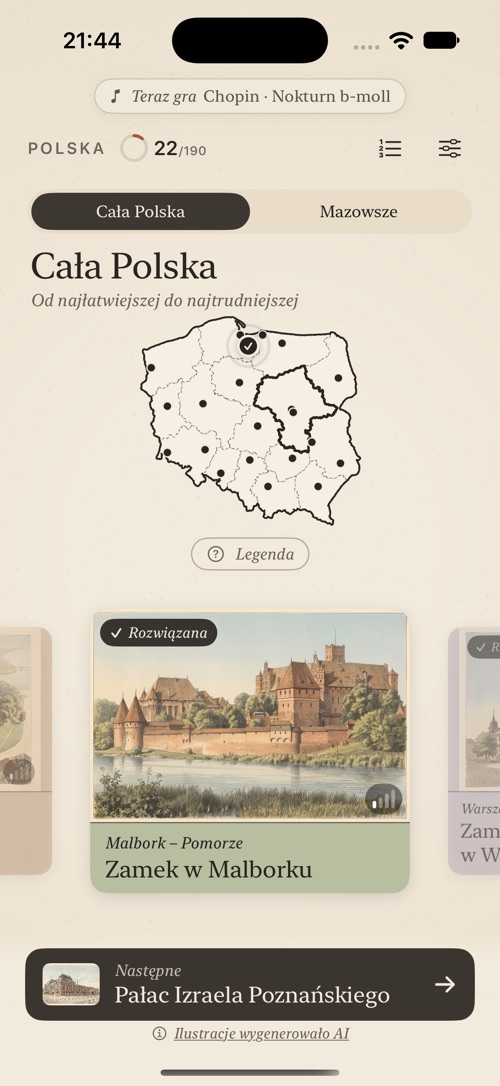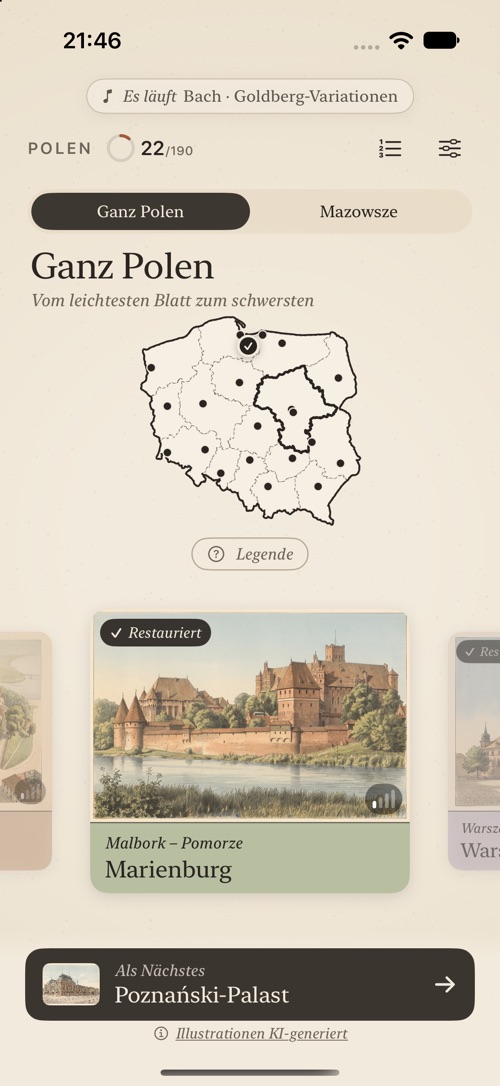
A jigsaw puzzle of Polish landmarks
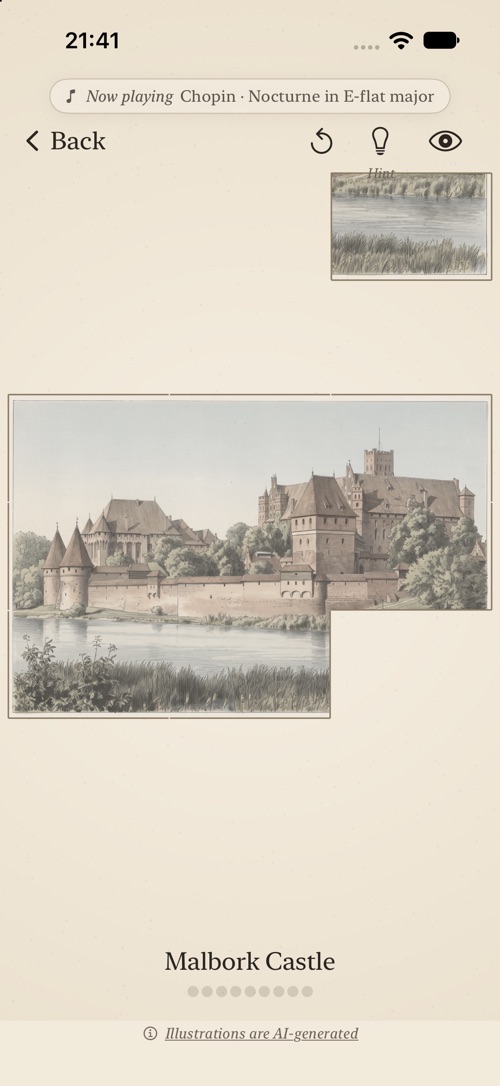
Drag the pieces of an illustrated plate back together. Pieces that belong together lock with a soft piano note and a tap, then move as one. Castles, palaces and old towns from every voivodeship.
Write to be told when it is outiPhone and iPad · English, Polish and German · no account · no ads · no data collected
Not on the App Store yet.
How it plays
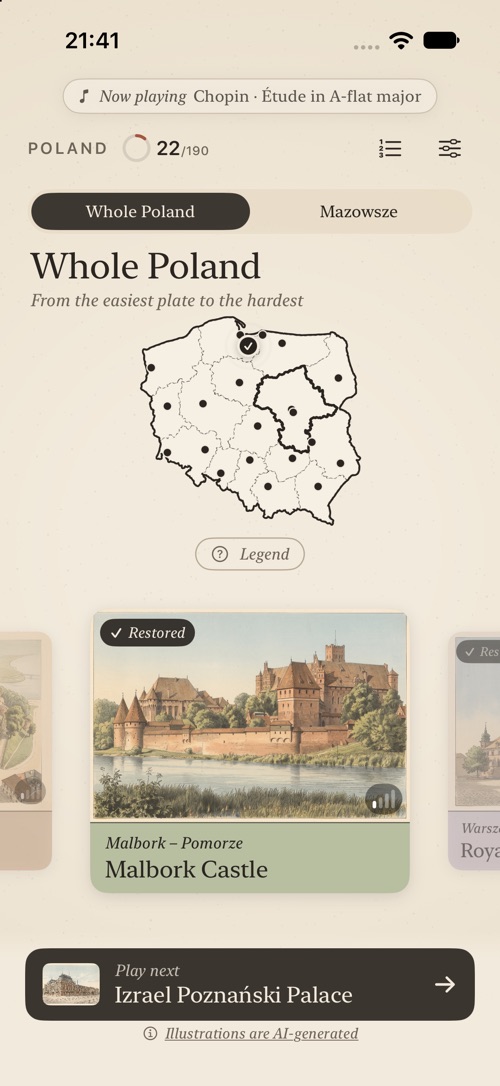
Start in any voivodeship. Each one has its own row of plates, and the first is always open.
Pieces that belong together lock with a soft note and a haptic tap, and travel as one block. Whatever is in the way simply steps aside.
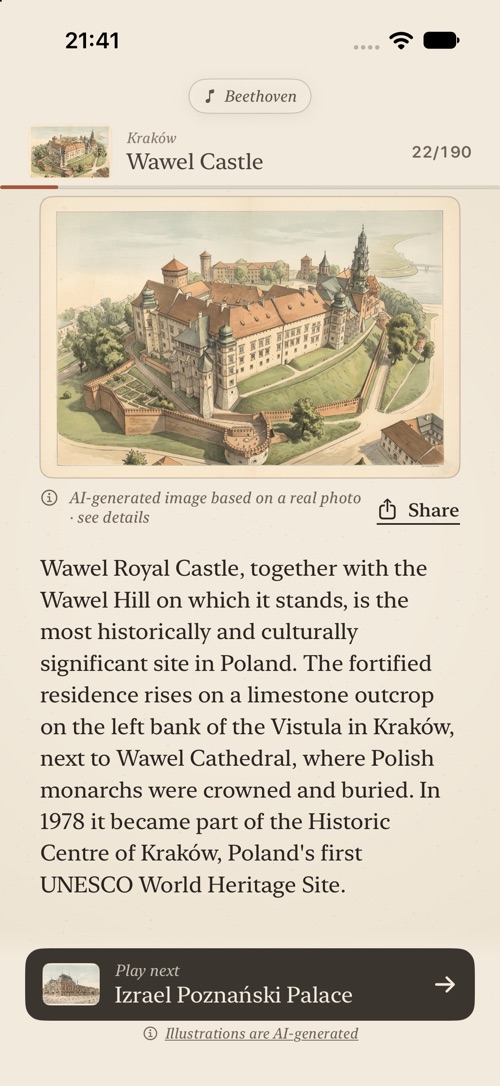
A map turns in close on the place, then the picture and the story of the place, from Wikipedia, are waiting. Share it as a postcard.


The map
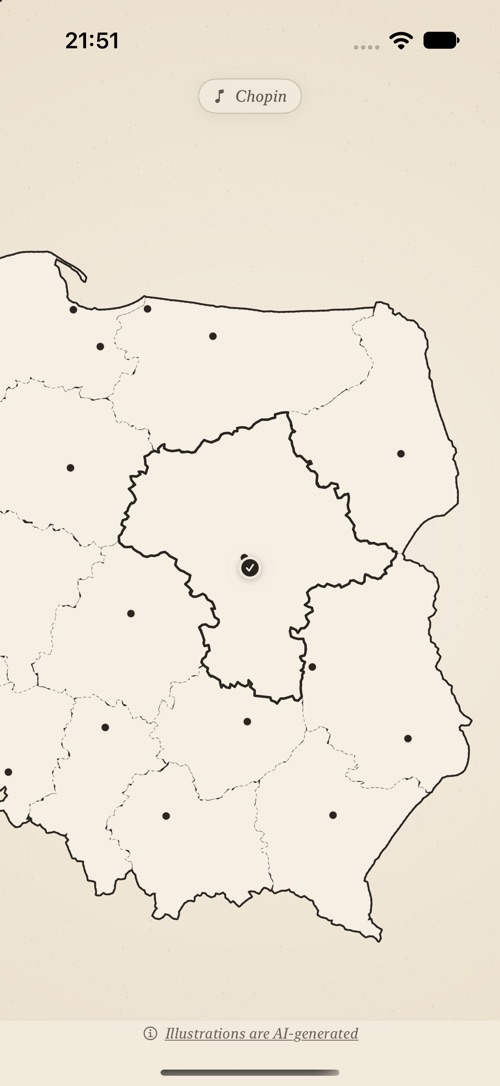
190 landmarks across all 16 voivodeships, each with its illustration, its story and its photo credit.
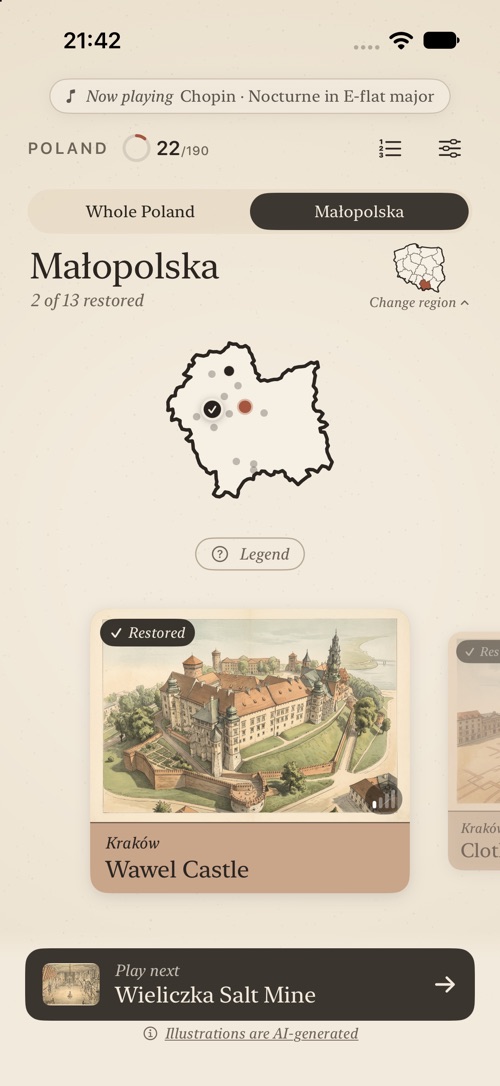
Start wherever you like. Each plate you finish opens the next one in its voivodeship, and the plates get finer as you go: the first one is cut into 8 pieces, later ones into up to 35. A restored plate can be solved again as a harder 48-piece puzzle that earns points.
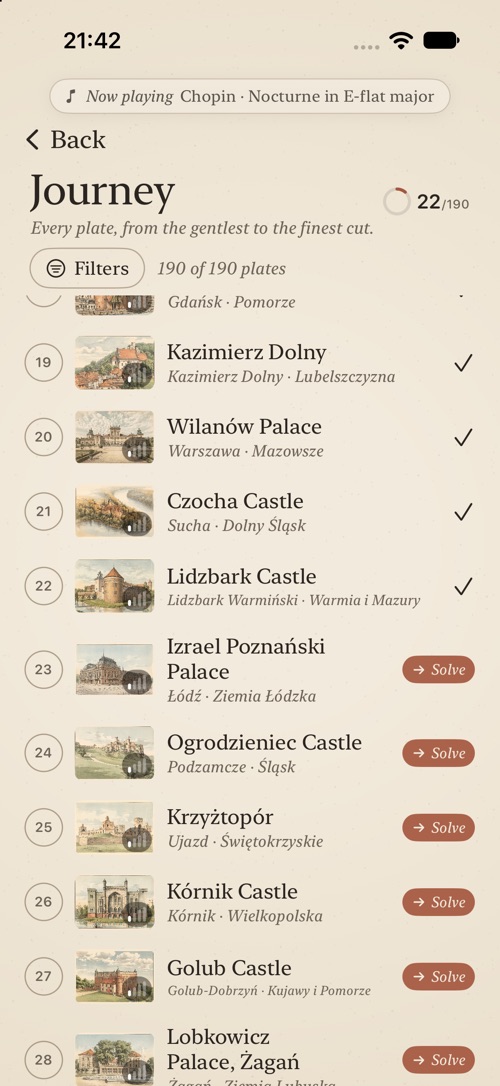
Tap a voivodeship to zoom in, swipe to come back out. The Journey list shows every plate from the gentlest cut to the finest, and can be filtered. Leave a puzzle half done and it waits exactly as you left it.


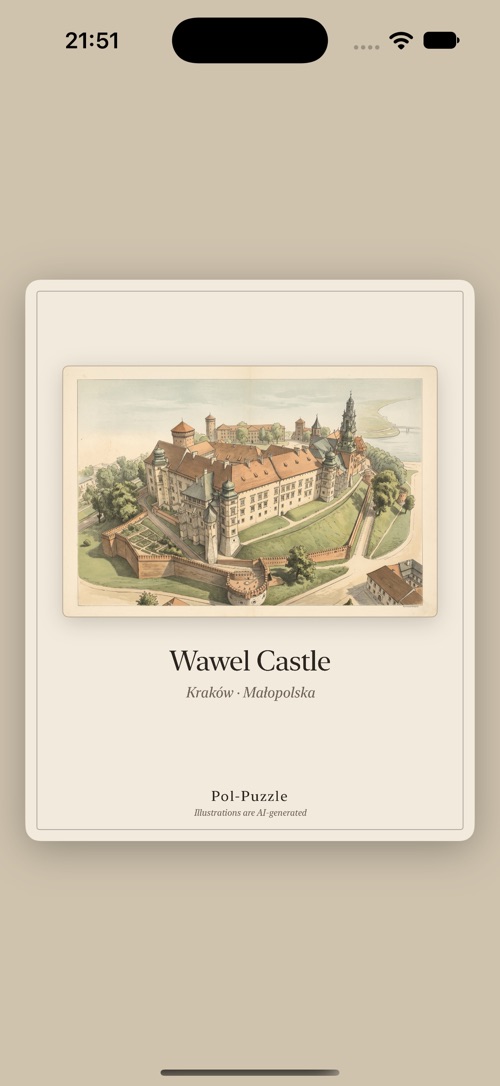
When the last piece locks, a map turns in over the screen, close on the town, and draws back to all of Poland. Then the page glides down to the plate’s picture and the Wikipedia story of the place. Below it: where it is on the map, a slider that compares the illustration with its photo, and a button that makes a postcard to share.


Sound
Every joined seam plays the next note of a soft, synthesised piano. The notes follow the opening of Chopin’s Nocturne in E-flat major, Op. 9 No. 2, so the tune comes out as the plate comes together.
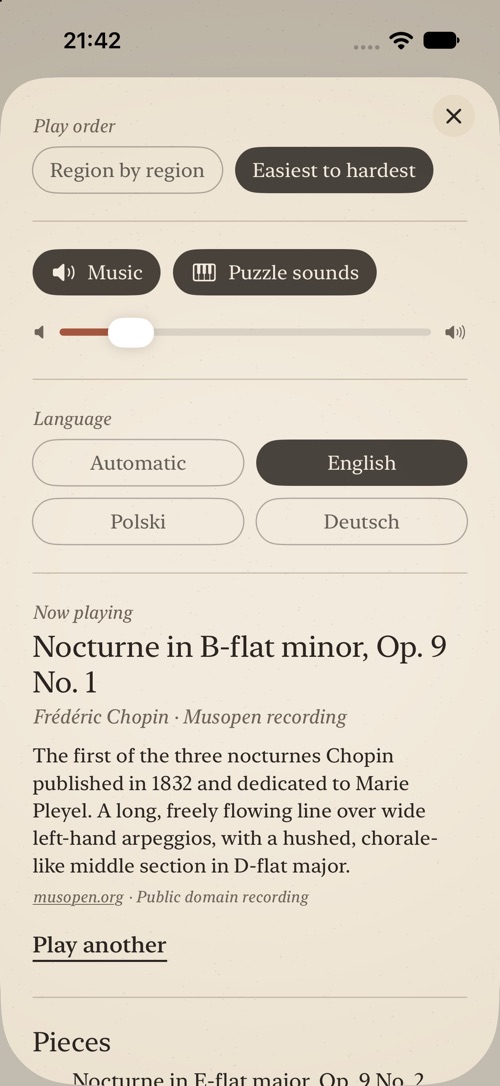
Underneath, quiet recordings of Chopin, Beethoven and Bach play, from Musopen, in the public domain. A “Now playing” banner names the piece. Volume and mute are in Settings, and the puzzle sounds can be turned off on their own.

Languages
The app follows the language of your phone, or the one you choose in Settings, in the buttons and in the Wikipedia text that comes with each restored plate (in English if an article does not exist in your language).


Illustrations
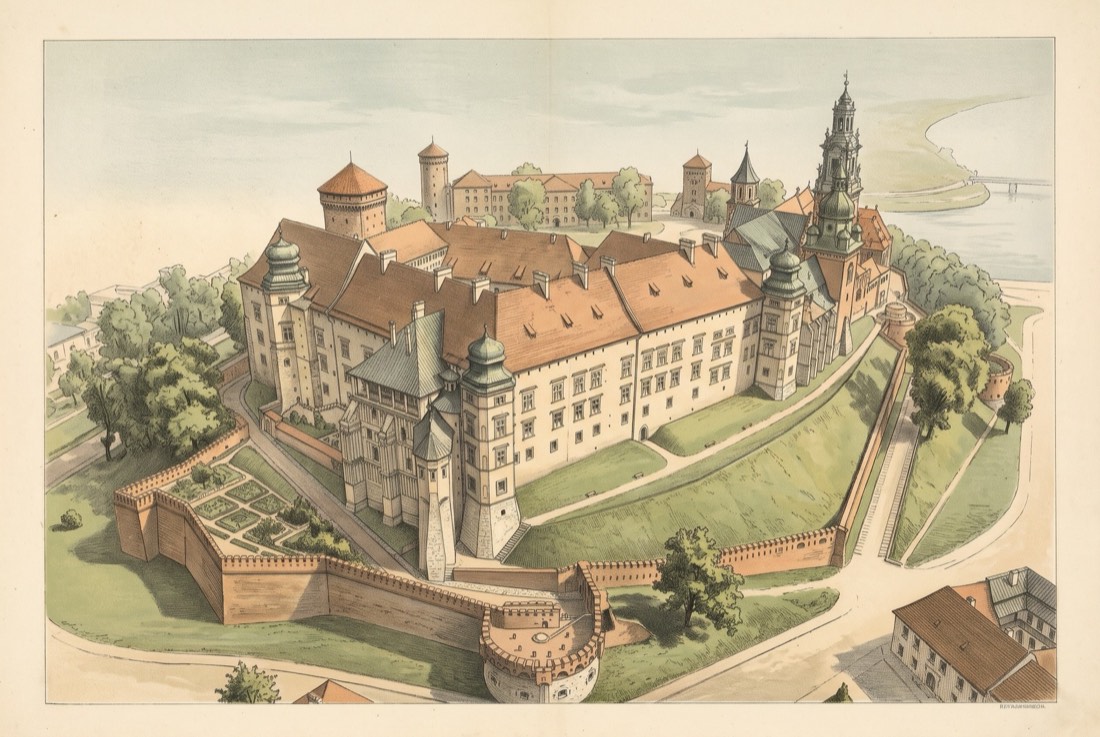
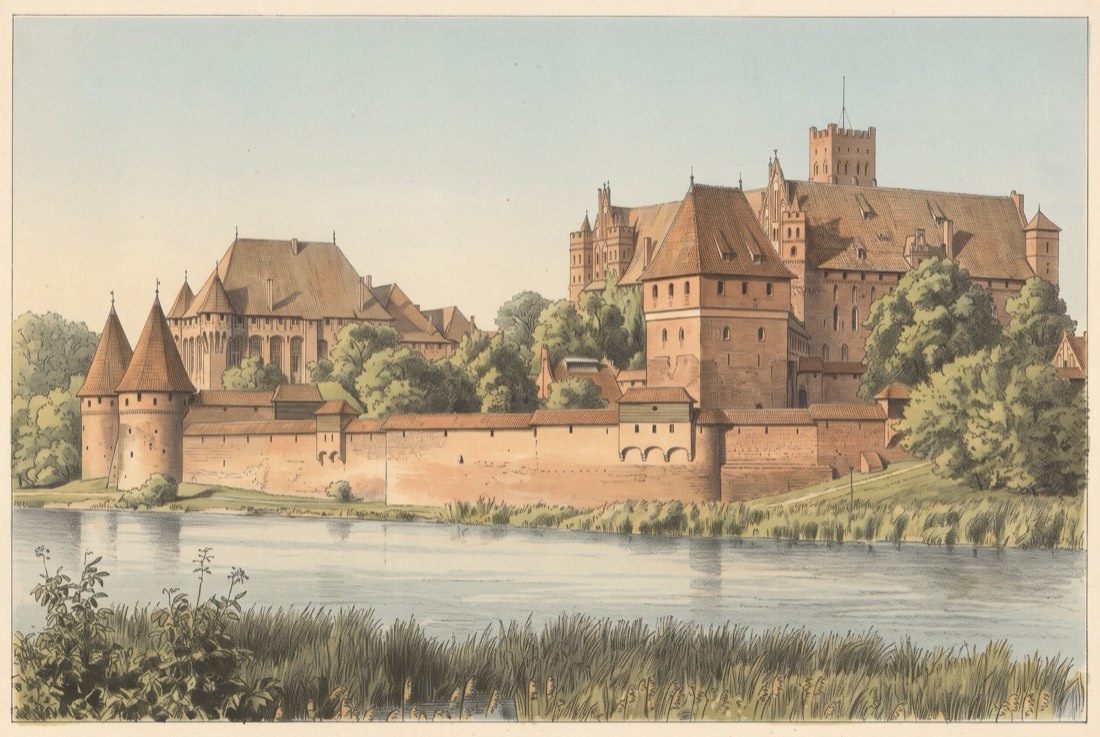
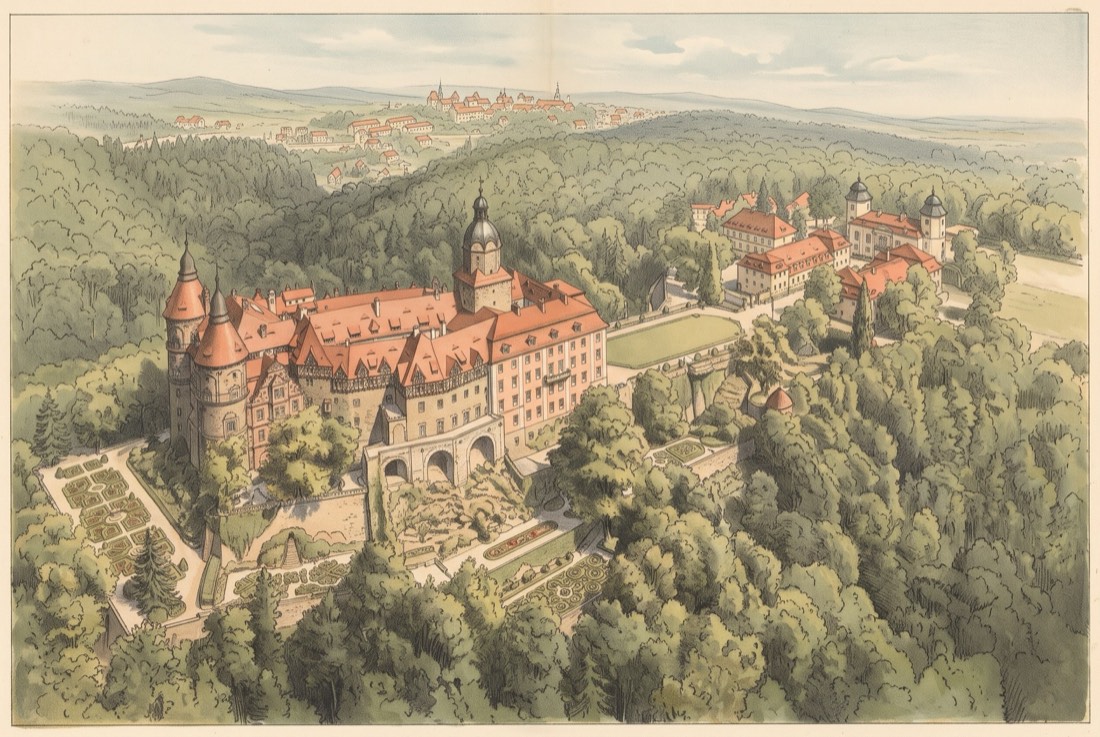
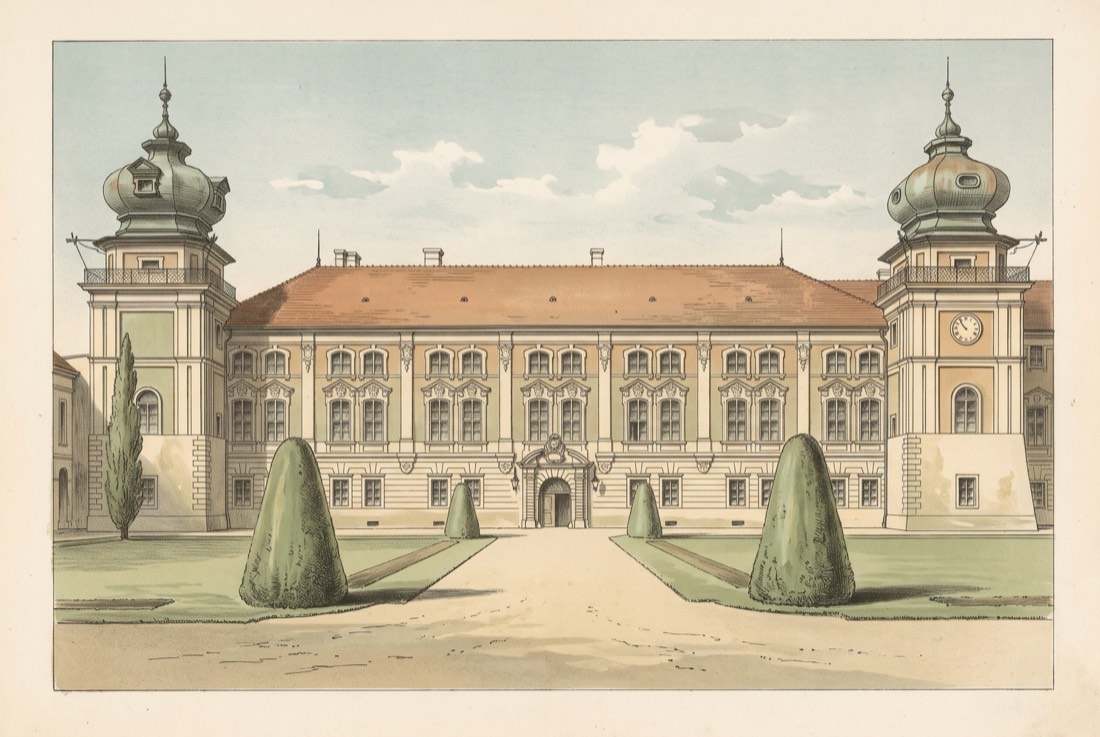
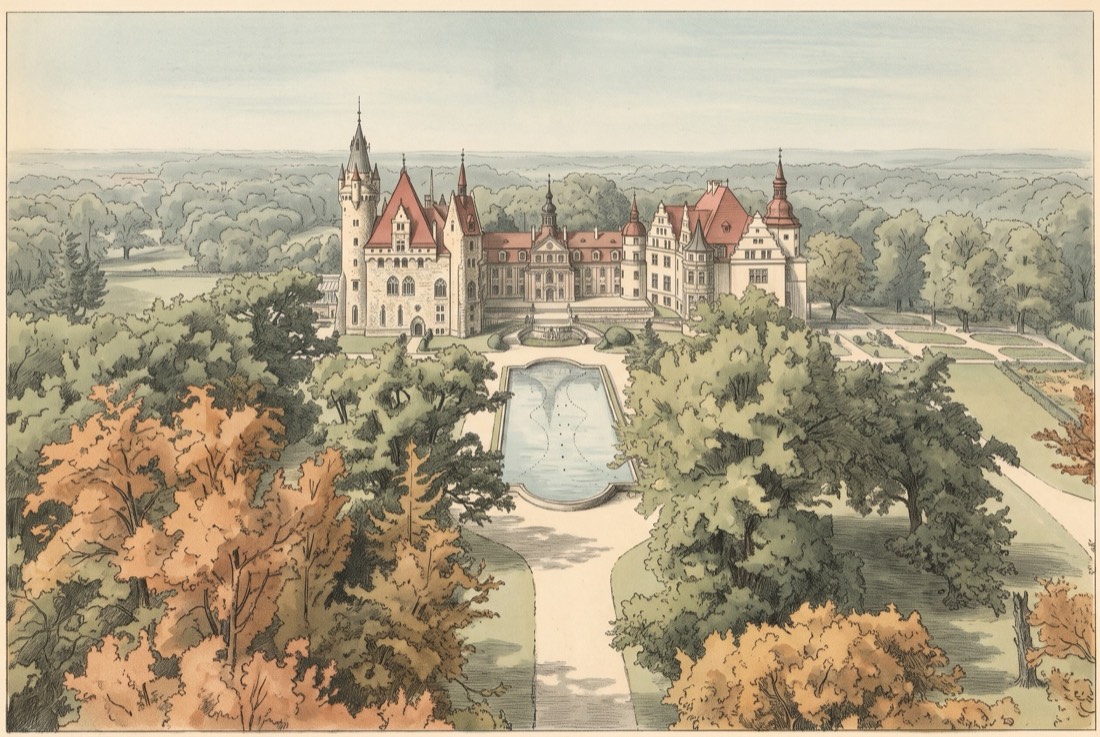
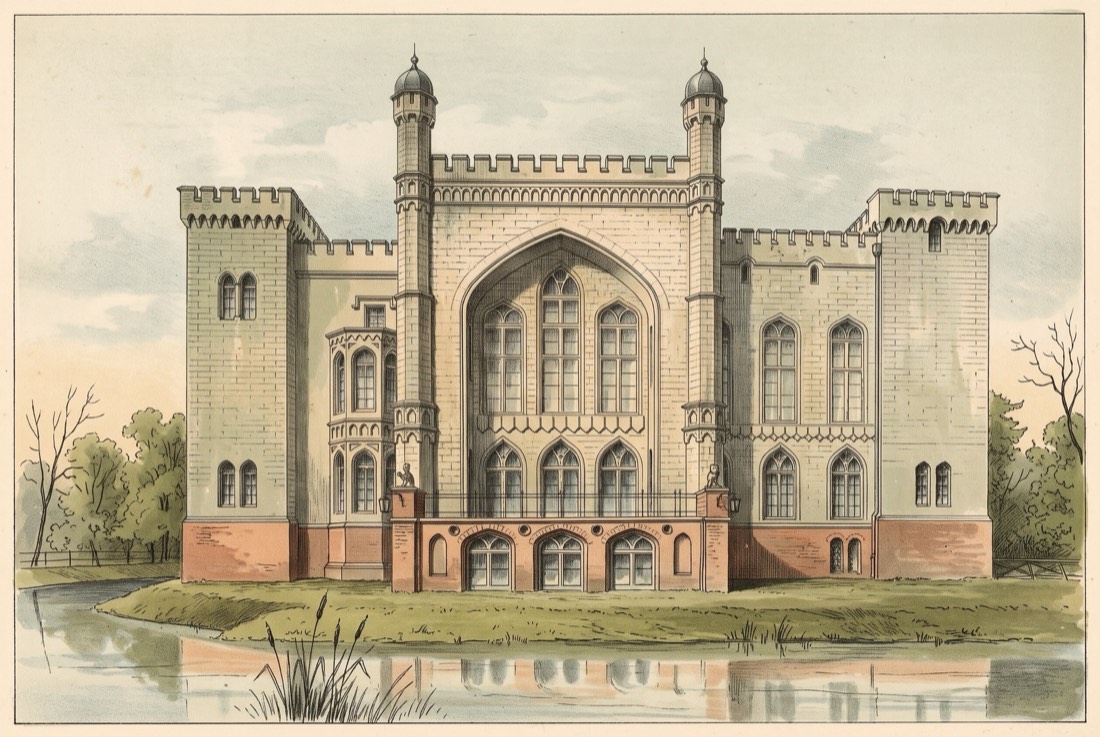
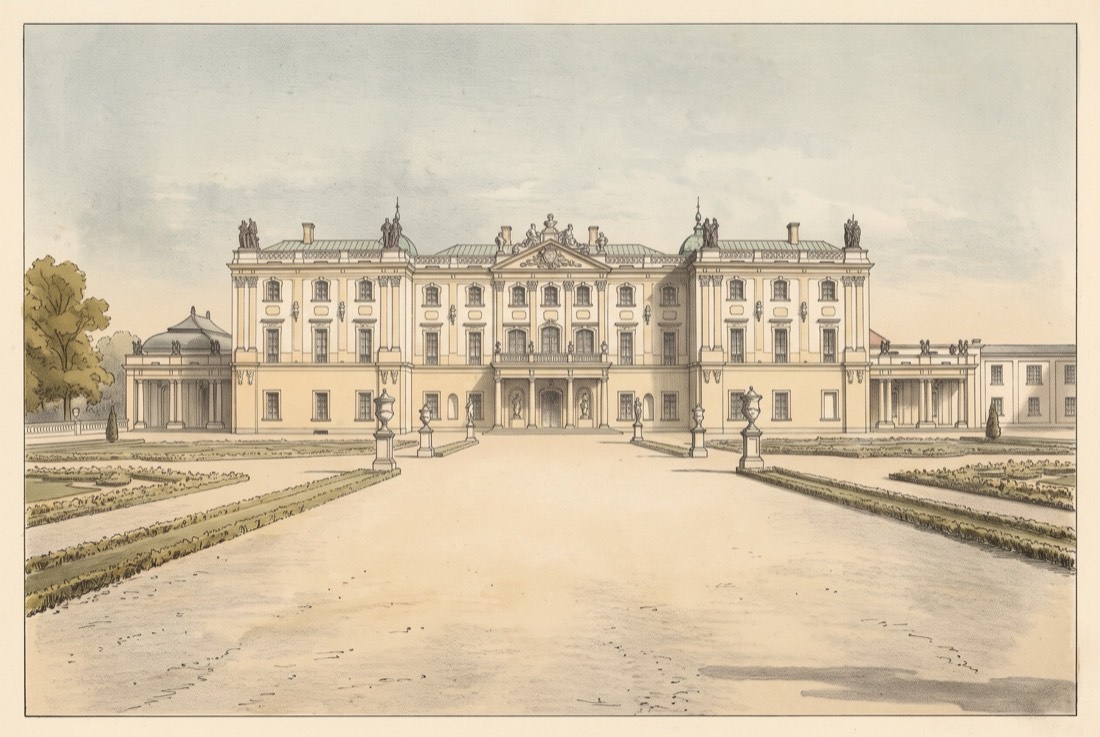
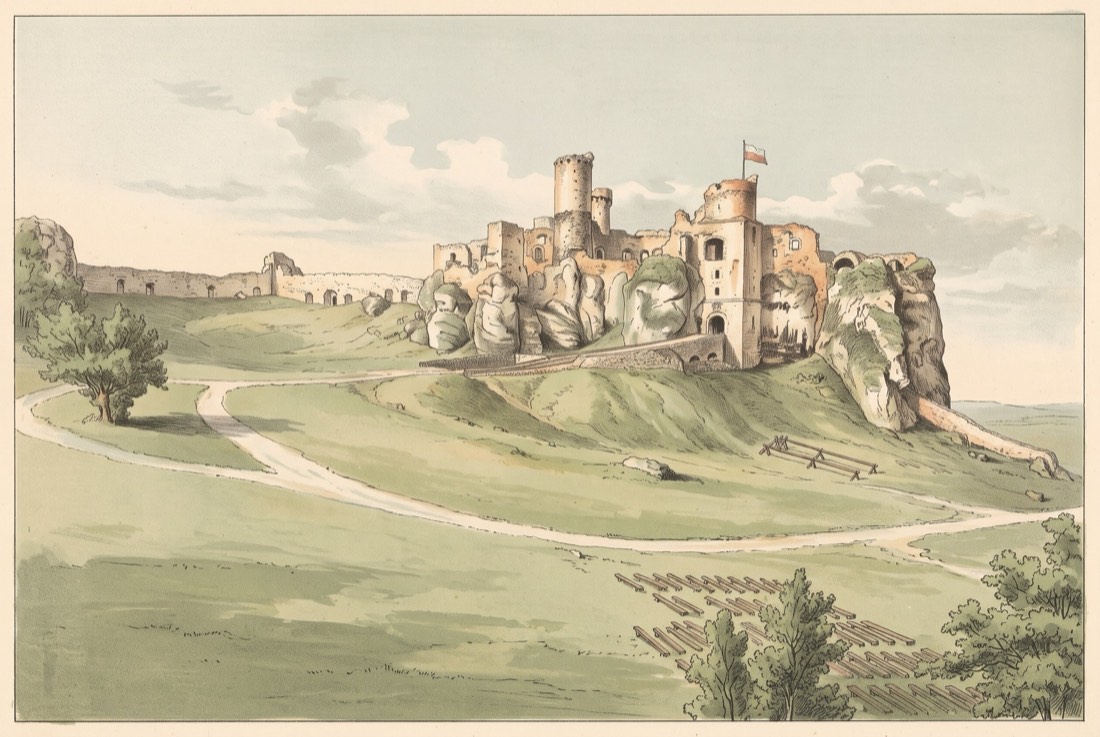
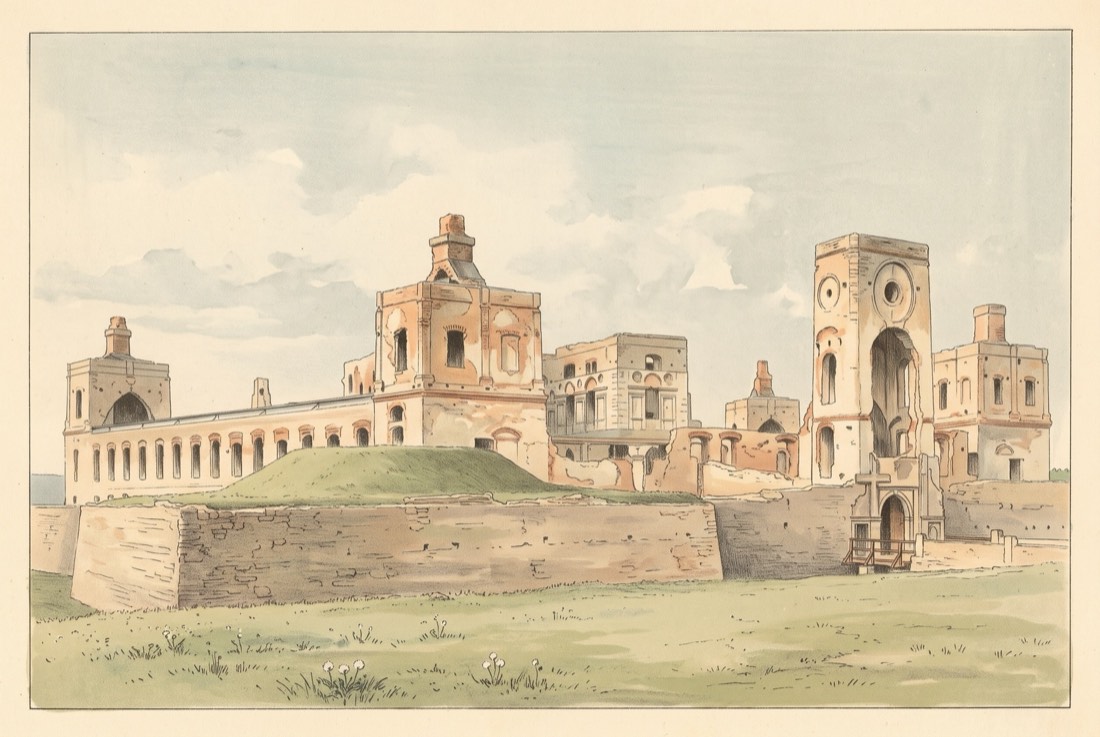
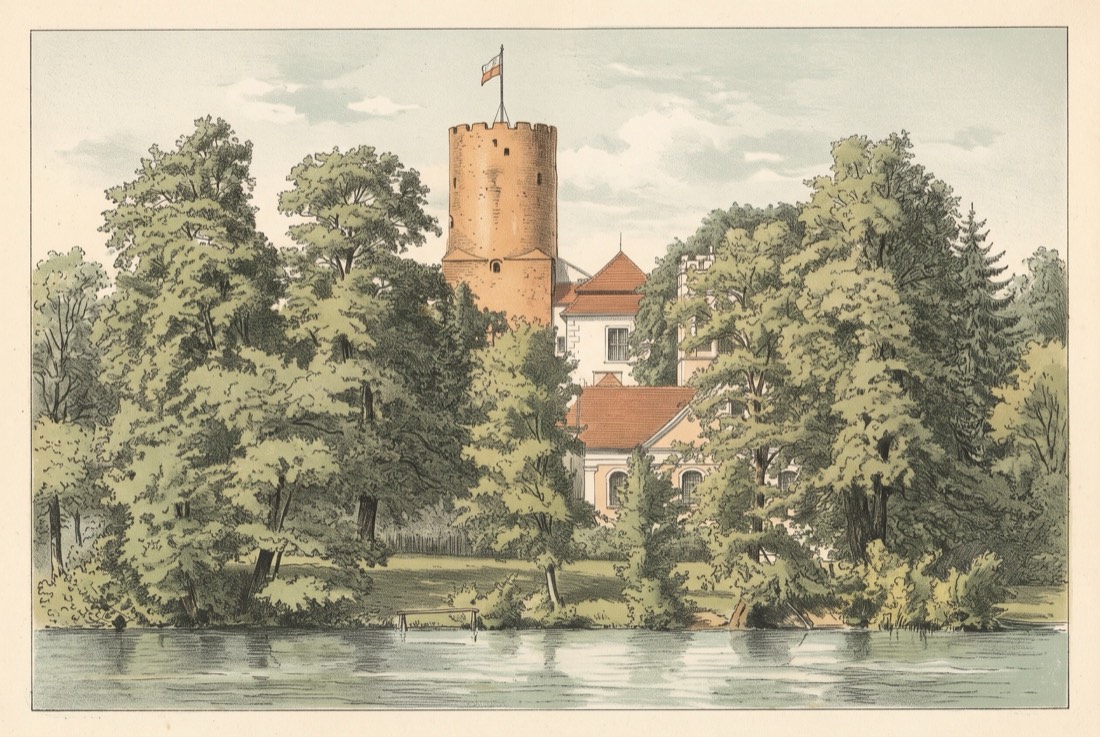
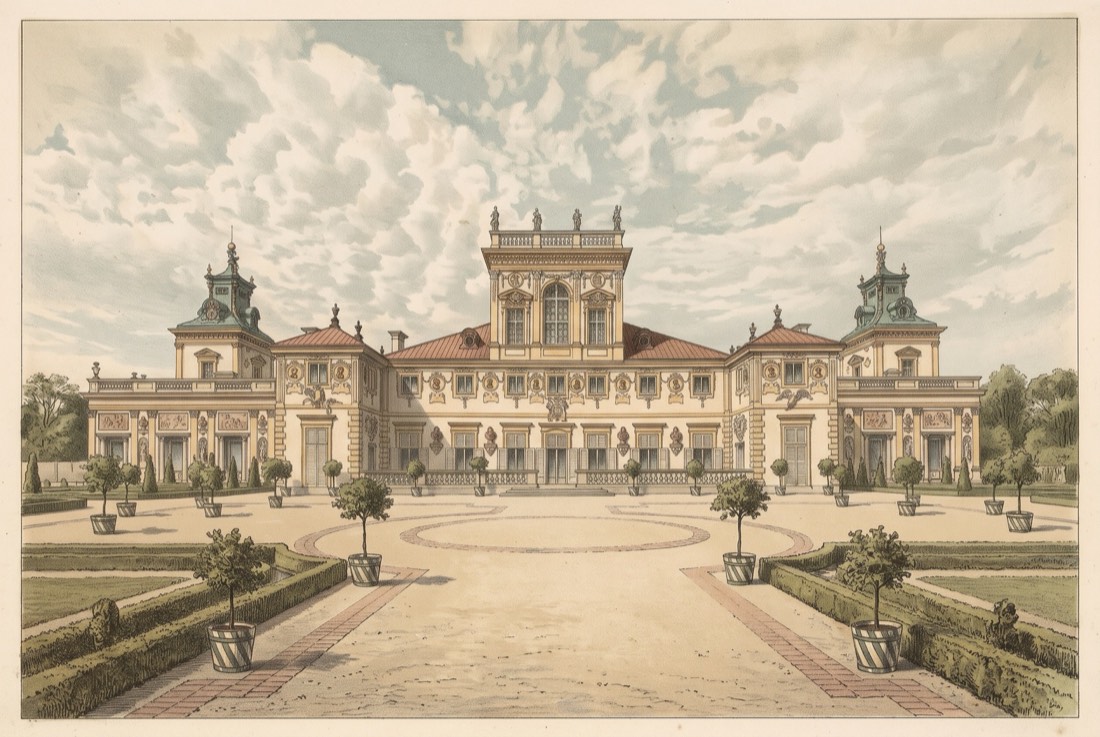
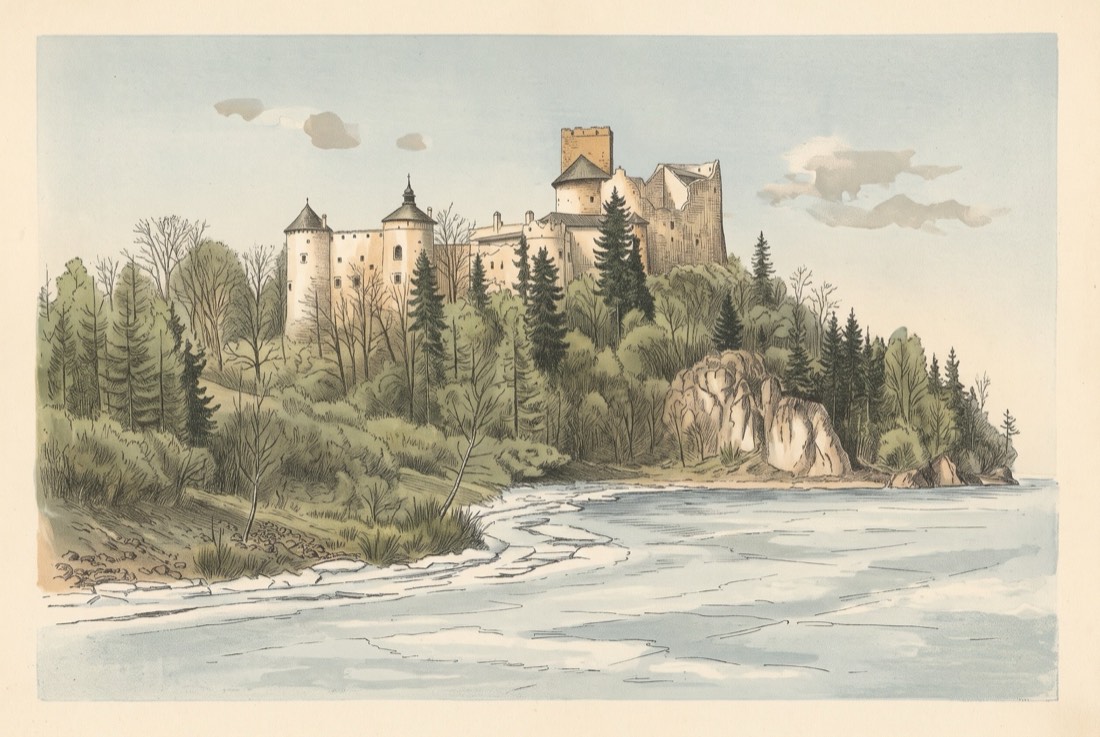
Every illustration in the game was generated by an AI image model (Google’s Gemini), prompted to imitate the look of 19th-century printed views. They are not historical lithographs, not hand-coloured, and not made by a human artist.
Each one is redrawn from a freely licensed photograph on Wikimedia Commons, and the app credits the photographer and the licence of every photo. Treat the pictures as artistic impressions: proportions, details and surroundings may be inaccurate. The Wikipedia link under each finished plate shows how the place really looks.
A line on every main screen and a page about the images, with the prompt we used.
Photographer, photo and licence for every plate, in the app and on the credits page.
Most photos are CC BY-SA, so the illustrations are shared under the same licence.
Gallery
Each picture is an AI illustration after the photo credited below it. Where the photo is CC BY-SA, the illustration is shared under CC BY-SA too.


Other apps you might like
Work in
Work in
Work in
Work in